
Daly City Directory Volumes and Years
The Daly City city directory shelf makes more sense once its limits are clear. Daly City Public Library's digitized holdings list a single 1939 volume, the Daly City Commercial and Civic Directory compiled by Albert H. Boynton and Daly City Record. Later editions came from City Directory Service, covering 1969-70, 1970-71, 1972-73, 1973-74, 1976-77, and 1977-78. These are commercial and civic volumes rather than confirmed comprehensive household or reverse directories. Treat them as one layer of a Daly City residents directory search. Property rolls, voter rolls, and parcel records can fill the gaps between these years for anyone tracing past residents of Daly City.
| Collection | Years | Where held | Access and scope |
|---|---|---|---|
| Commercial and Civic Directory | 1939 | Daly City Public Library digitized collection | Officials, organizations, statistics, business, narrative residential section |
| City Directory Service, Daly City/Colma | 1969-70 | Library digitization and Internet Archive | Businesses, addresses, phones, maps, schools, churches, civic groups |
| City Directory Service, Daly City/Colma | 1970-71 | Library digitization and Internet Archive | Business and civic entries; verify OCR against page image |
| City Directory Service, Daly City/Colma | 1972-73 | Library digitization and Internet Archive | Entry fields and display-ad cross-references are visible |
| City Directory Service, Daly City/Colma | 1973-74, 1976-77, 1977-78 | Library digitization and Internet Archive | Later commercial/civic snapshots; gaps remain between editions |
The seven digitized objects cover 1939, 1969-70, 1970-71, 1972-73, 1973-74, 1976-77, and 1977-78. A stretch of missing years means publication paused. It does not prove nobody lived at an address during that span. Always name the edition and page behind any directory conclusion. The shelf is specific but not continuous.
Search Daly City Beyond the Catalog Heading
Not every local entry sits under the modern city name. Search the catalog and the full text for Daly City. Try Daly City/Colma, Colma, and Broadmoor too. Add San Mateo County, San Francisco, Visitacion Valley-adjacent districts, and postal stations. Daly City incorporated in 1911. Older county and neighborhood labels reflect a different map entirely. Broadmoor still sits outside the incorporated city, even when its postal identity sounds local. That geography trips up plenty of street directory searches.
Start with the Daly City Public Library catalog. Ask the reference desk to verify a shelf run before concluding a missing year never existed. The California State Library California History Section adds directories and newspapers. It also holds maps, county histories, and genealogy references. Search by the publication's coverage statement first. Then read the page image itself rather than trusting a title or catalog keyword. The state collections reward searchers who use both place names and publication context together.
Repository metadata can point you to a volume, but the volume itself decides whether a name, address, or institution appears.
Daly City Directory Editions and Their Scope
The 1972-73 City Directory Service volume states its publisher in the front matter. It also lists a Daly City mailing address and a copyright year. A business entry may carry a name. It may also show a category, street number and street, telephone exchange and number, and a display-ad page. The 1939 volume calls itself the first edition. It gathers officials, organizations, business material, and registration, population, and business statistics from 1938. Its Residential section reads as narrative, not as a household roll.
The 1970-71 edition adds advertisers and maps. It also includes emergency and city numbers, officials and staff, a business index, schools, professionals, civic organizations, Westlake Shopping Center, and churches. Fields like these make the Daly City city directory strong. It suits tracing a shopkeeper, official, school, congregation, or civic group. They do not promise that every resident, spouse, occupation, or owner marker appears.
- Read the front matter for publisher, coverage, place labels, and stated purpose.
- Check whether the section is business, professional, civic, school, church, residential, or an index.
- Capture the page image, entry wording, address, phone, and publication year before interpreting the name.
- Corroborate the connection with a deed, census, newspaper, obituary, probate record, or official filing.
The California Revealed collection search can surface digitized local-history context beyond the directory shelf. The Internet Archive object remains the practical page-image source for the identified volumes. California Revealed offers its own separate digital-collection view for local history material.
Check the collection description to tell whether a result is a directory page, a finding aid, or another local-history object.
Inside a Daly City Directory Entry
A directory entry is a compressed record. In a commercial section, the name may belong to a store, not a person. An address and phone tie the listing to a place during the publication period. A parenthetical display-ad reference points to an advertisement, never to a second household. Officials, schools, churches, and civic groups each use different fields. Read the heading and nearby index before assuming an entry's type.
A typical 1972-73 business entry can show "American Shoe Shop," a category, 6274 Mission Street. It can also carry an established date. Other entries list a business name, street address, telephone exchange, number, and display-ad page. OCR flattens columns, drops punctuation, and changes digits. Inspect the PDF image before trusting a transcription.
| Observed field | What it may mean |
|---|---|
| Name or business | Listed person, company, institution, or shop, depending section. |
| Category | Trade or civic classification that helps separate similar names. |
| Street and number | Address association for the edition's publication period. |
| Telephone exchange and number | Contact lead from that historical phone system. |
| Display-ad reference | Page pointer to an advertisement or business description. |
- Criss-cross directory
- An address-first directory that may connect a location with a listed name or phone.
- Householder index
- A name or household finding aid; no complete Daly City run was verified in the research.
- Abbreviation key
- The publisher's guide to shortened street, trade, title, or telephone terms.
- OCR
- Machine-read text from a scan, useful for discovery but not a substitute for the page image.
Daly City City Directory OCR and Names
Daly City's migration and multilingual history makes name search sensitive to indexing choices. Historical directories may reverse surname and given name. They may drop diacritics, flatten compound surnames, substitute initials, or record a married name. OCR adds a second layer of error. Columns, telephone numbers, and punctuation can be read out of order.
Search each surname component. Try a shortened given name, initials, and wildcard spellings. A spouse, relative, address, business, or neighborhood can unlock a stubborn entry. Preserve the exact form found in the volume. Then compare it with the original scan. A close spelling is a candidate, not a merged identity. Pair the directory date with a deed or newspaper date before inferring a move.
Note: A missing OCR hit can reflect a damaged scan, column order, spelling variant, or scope limit rather than a missing person.
Trace a Daly City Household Through Years
The Daly City city directory series carries gaps. Treat a household trace as a chain of dated anchors instead of a yearly roll. Begin with a known address, school, church, or business. Pull the nearest edition, note the entry and page, then hunt the same name or address in the next surviving volume. The residents directory links years that censuses skip. When the question is about a family rather than a firm, pair each anchor with a census schedule, deed, newspaper item, obituary, or probate record.
- Set the target person's name, spelling variants, address, occupation or institution, and a date window.
- Search the 1939 volume or the 1969-78 editions according to the expected era and section.
- Verify every hit in the scan and note whether it is a business, civic, school, church, professional, or residential reference.
- Use the 1940 or 1950 census when the address can be placed in an enumeration district; public federal schedules currently run through 1950.
- Use a deed, obituary, probate petition, or later directory as a separate dated check, and keep uncertain candidates apart.
Federal census schedules stay closed for 72 years. That rule leaves 1950 open and everything later sealed. A residents directory entry can bridge the gap. It cannot fill the closed period or prove a family held one address the whole time.
Daly City Libraries and Historical Reading Rooms
Daly City Public Library is the first catalog stop for any resident lookup. Its eLibrary carries Newspaper Source Plus, New York Times access, America: History and Life, and Archives Unbound. It also offers History Reference Center and Samuel Chandler's Gateway to the Peninsula. The library publishes no complete obituary index, reverse street directory, yearbook set, or Ancestry Library Edition listing. Bring those questions to the reference desk.
The San Mateo County Historical Association archive reaches from 1830 to the present. Holdings span books, clippings, documents, film, ledgers, letters, manuscripts, microfilm, newspapers, and periodicals. They also cover transcripts, institutional records, and student monographs. Its reading room sits at 2200 Broadway in Redwood City. The collection is noncirculating, and it needs an appointment at least two days ahead. Bring photo ID. Ten free PDF scans come with each visit. Pages after that cost $0.25 each under the posted research notes. The association's research and holdings site rounds out the repository picture for a Daly City city directory search.
Daly City History Guild Museum & Archive at 6351 Mission Street offers another local lead. It was founded in 1983. The museum opens free Saturdays from noon to 3 p.m. It also takes group arrangements. Its shelf lists no itemized directory or obituary index, so ask before a visit.
Note: A reading-room appointment or museum visit can surface shelf context no catalog record describes.
Daly City Newspapers, Obituaries, and Organizations
A residents directory entry gains force when a newspaper explains the event around it. Daly City Public Library's digitized run covers Times Gazette issues from 1909-1949, Daly City Record from 1914-1950, The Record from the 1950s-1962, The Post from 1965-1978, and Daly City Shopping News from 1939-1944. Coverage stops and restarts. Check the actual date and title before trusting a run.
Search a name, exact address, street variant, neighborhood, relative, funeral home, business, or organization. An obituary can point toward relatives and probate. A news story can explain a move, civic post, school, church, or business tie. Daly City events cross market lines, so search Peninsula and San Francisco titles too. OCR stumbles most on telephone-directory columns and punctuated names. Read the image itself when a hit looks promising. Online Archive of California finding aids can surface institutional and local collections. The historical association and library settle practical access.
A newspaper or obituary is a dated corroborating source. It is no substitute for a full resident directory.
Naturalization and Regional Archives for Daly City
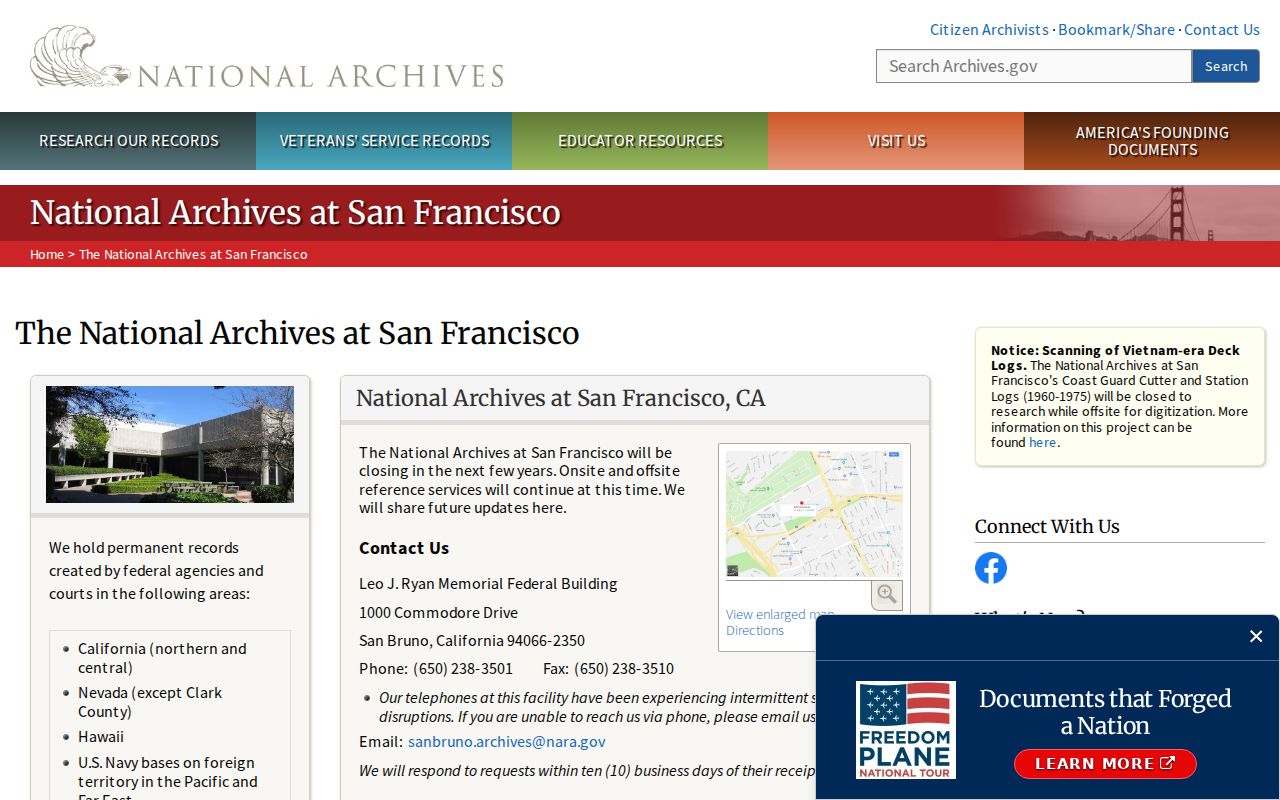
San Mateo County ACRE lists naturalization certificates from 1800-1991, a group that predates the county's 1856 founding. A certificate may carry a name, origin, date, and court lead. Access depends on the record and its form. The California State Archives and state library add finding aids, and the National Archives at San Francisco holds regional federal material covering census, immigration, naturalization, and military records.
Search the National Archives at San Francisco by San Mateo County, Daly City, Colma, agency, court, or naturalization term. California Revealed and the Online Archive of California point to cultural-institution collections. A catalog description never guarantees an item is digitized or on demand. That is why a Daly City city directory search often needs a county or San Francisco label.
Log the repository, collection, box or item description, and access date for every find. A later researcher then can tell a finding aid from an inspected record.
Note: A finding aid proves a collection exists, not that a named Daly City directory item is digitized or open.
Daly City City Directories for Family History
A Daly City city directory works best as a clue generator for family history. Begin with a name. Add a likely neighborhood, a business, or an institution tied to the person. From there, widen the circle. Pull in the 1940 or 1950 census, county deeds, probate files, the death index, obituaries, school and church records, and newspaper pages. A historical directory can place a name in a spot during a publication period. That is its strength. It cannot confirm every household member or prove continuous residence.
Sanborn maps help too, but differently. They show building footprints and uses, not occupants. The Sanborn map collection at the Library of Congress holds Daly City-area editions from March 1915, June 1918, June 1927, and June 1950. Test old street numbers against the map. Then return to the deed or census for the people themselves. When the digitized run ends, the State Library and local repositories can extend the trail.
The strongest conclusion cites the edition, page, and exact entry, backed by an independent check. Say plainly when no verified volume exists for a year. Never fill the gap with a generic directory claim.